%20(1).jpg)
Related

What Goes Up Must Come Down
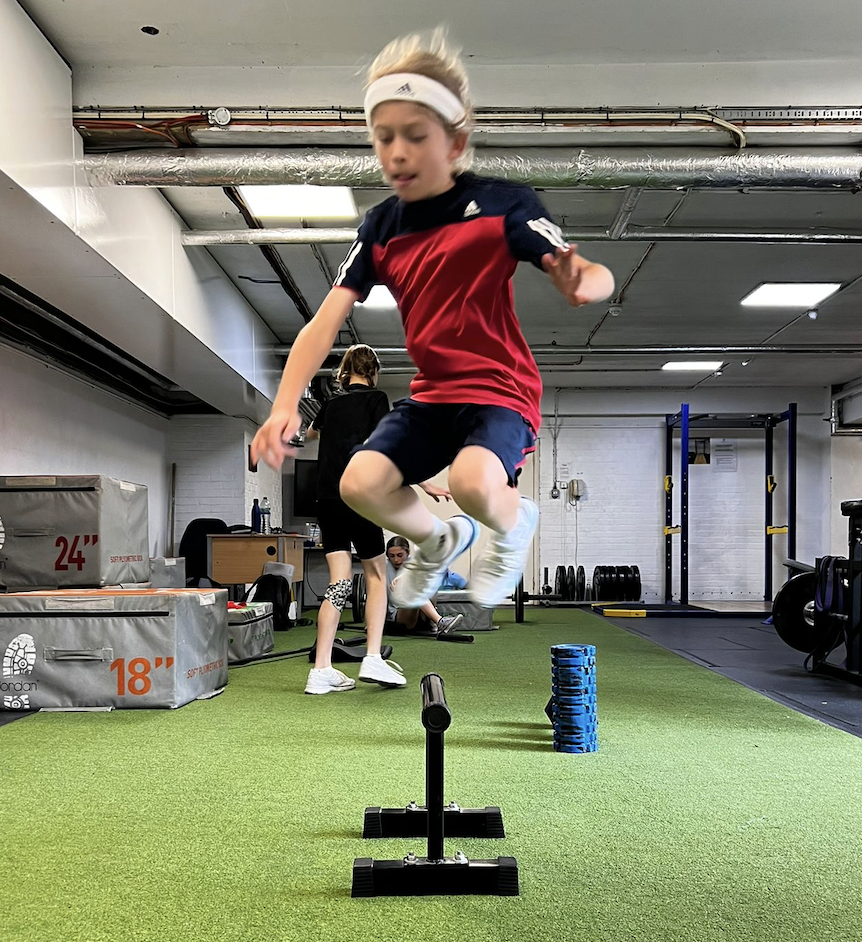
Children and young performers love to run, love to jump, they love to take full advantage of leaving the ground. In basketball, jumping up for a rebound, attacking the goal circle in netball or simply just jumping, whether it be for a header or a line out, jumping is everywhere in youth sport. What builds a confident and powerful athlete isn’t just the jump itself – it’s the landing.
Landing can be overlooked when thinking about athletic characteristics or skills. It’s not always spectacular. You don’t watch highlights of athletes specifically landing (Well I do but most people don’t) But for young athletes still growing and developing their coordination, landing mechanics might be one of the biggest performance boosters they’ll ever learn.
Why Landing Matters So Much for Young Athletes
As athletes grow, jump height increases, speed improves, and training intensity rises. That means landing forces rise too — sometimes to 5–8 times bodyweight. Without proper mechanics, that force travels through knees, hips, ankles and the lower back in ways a young body isn’t fully prepared for.
Scenario
- A 30kg child jumps off a box 30cm high. With a good technical landing, the landing forces would be around 2.5-3 x Bodyweight (BW). A bad, stiff, low-technical landing can increase those forces to 5-7 x BW. – Landing Matters!
Teaching landing mechanics gives young athletes:
- Stronger, safer joints
- More controlled movement
- Better power development
- Faster transitions (jump → move)
- Confidence in chaotic game situations
- A lower risk of injuries, especially ACL injuries
- A better foundation for plyometrics, sprinting and change of direction
Good landing ability is the ticket to further high-intensity athletic development.
Landing is hard, It takes time and that’s okay- What we see starting out.
Even the most talented youth athletes struggle with landing at times — especially during rapid growth phases. Long limbs, shifting body proportions and new strength levels can make even simple jumps feel clumsy for a period of time. You’ll often see:
· The Upright Drop: Landing stiff with hardly any knee bend - heavy impact.
· The Knees Collapsing: Knees fall inward as athletes try to absorb force due to lack of stability
· The Leaning Tower: The torso bends way too far forward, pulling the whole landing off balance.
· The Single Leg wobble: Athletes land on one foot or try to stagger the landing unintentionally and hope - a quick way to roll an ankle
· The Best intentions: some idea of technique but unstable finish — control is still catching up with effort. (The cheques are being sent, but the body has no way to cash them in.)
Most developing athletes will at some point look like this. These aren't “bad habits” in isolation. They’re actually very good indicators for us as Strength Coaches that there needs to be improvements in coordination, awareness, and strength development- Global skills we want to develop into adulthood.
How to Teach Landing Mechanics Without Killing the Fun
Young athletes don’t respond well to robotic drills or long technical lectures. They learn best through rhythm, imagery, challenge, competition and purpose. When landing becomes a part of athletic development — not a chore — they buy in immediately.
How do we effectively coach landing to youth athletes?
1. Quiet Landings for Control
Landing as softly as possible:
“No noise. No stomp. Total control.”
2. Athletic Ready Position Landings
We take it back to the basics. Turn every landing into a ready position:
- Knees bent
- Hips back
- Chest tall
- Eyes forward
- Feet shoulder-width
This is the core foundation for rebounding, defending, sprinting and changing direction.
3. Stick & Hold Drills
After jumps and landings, you’ll hear us hammering home the importance of stick and holding that position for 2 -3 seconds.
- E.g. Drop landings, Snap downs, Repeat Jump and stops
This forces:
- Stability
- Core control
- Balance
- Confidence
Perfect for all field and court athletes.
4. Single-Leg mastery
Every athlete eventually needs to land on one leg — it’s unavoidable in sport.
We Start with:
- Step-and-stick
- Hop-and-hold
- Lateral hop-and-hold
- Diagonal landings
Mastering single-leg control is a direct injury-reduction tool.
5. Athletic Challenges & Mini Competitions
Young athletes are competitive and thrive with a challenge.
- Who can land the quietest?
- Who can stick their landing the longest?
- Who can repeat with perfect technique the most
- Who can hit the target spot most accurately?
Competition increases concentration and effort instantly.
Skill vs Strength? : Quick answer, it's both!
Learning new skills is great , but as intensity increases and young performers gain confidence, their technique will be tested. They need to have the strength to apply that skill.
What do we use to build strength/stability in the core, hips, knees, and ankles:
-Squats & split squats
-Hamstring/hip hinge (good mornings, nordics, RDL)
-Calf and ankle stiffness drills (balance games, calf raises)
-Core stability training (bear crawls, plank games, lateral throws)
-Hip strength exercises (glute bridges, monster walks)
-A whole bunch of Single-leg movements in multiple directions
Building robust muscles around growing joints helps athletes control landings even under fatigue or pressure.
The Bigger Picture: Building Confidence, Resilience, and Long-Term Development
Great landing mechanics aren’t simply about reducing injuries. They’re about building young athletes who:
- Trust their bodies
- Move powerfully and with intent
- Change direction confidently
- Can make those challenging game decisions
- Stay available for training and competition
- Progress safely into more advanced training
Landing becomes a foundational skill that unlocks strength, speed, power and agility. It supports long-term development through every growth spurt, every sport season, and every step toward higher performance.
Landing is not just the end of the jump its one of the keys on the pathway to unlock athletic mastery
.jpeg)
.jpg)