Related

Why Strength & Conditioning Is Essential for Youth Swimmers
As a parent of a competitive swimmer, you want your child to be fast, confident, resilient, and injury-free.
You’ve probably heard conflicting opinions about gym training for young swimmers:
- “They’re too young to lift weights.”
- “Swimming alone is enough.”
- “Strength training will make them bulky and slow.”
The research — and what elite programs are actually doing — tells a very different story.
Modern evidence shows that well-structured, age-appropriate strength and conditioning (S&C) is one of the most powerful tools for improving sprint speed, start performance, robustness, and long-term athletic development.
Let’s break down what the science says — and what it means for your child.
1. Stronger Swimmers Are Faster Swimmers
Swimming performance is strongly linked to the ability to produce force against the water.
Research shows extremely high correlations between upper-body strength and sprint performance. In fact, improvements in dry-land resistance training — particularly high-force and high-velocity work — have been shown to improve swim performance (Crowley et al., 2018).
Importantly, elite swimming strength coaches overwhelmingly use traditional resistance training (87%), with exercises like squats and pull-ups ranking highest for transfer to performance.
This tells us something important:
Swimmers at the highest levels are not avoiding the gym — they are prioritising it.
For youth swimmers, this does not mean maximal lifting. It means building strength progressively, safely, and in a way that supports technique and power in the water.
2. Starts and Turns Win Races — and They’re Strength Dependent
In sprint events, especially, races are often decided by hundredths of a second.
The start alone can account for a significant percentage of total race time in 50m and 100m events. Research analysing freestyle sprint starts highlights the importance of lower-body force production and rate of force development in determining start performance (Analysis of Freestyle Swimming Sprint Start, 2022).
Further, ballistic potentiation protocols (short, explosive strength exercises performed pre-race) have been shown to acutely enhance sprint performance when applied correctly (Effect of Ballistic Potentiation Protocols, 2023).
In simple terms:
The swimmers who can produce force quickly win.
Youth athletes who develop explosive strength safely and progressively build a foundation that benefits them for years.
3. Strength Training Builds Robust, Injury-Resistant Swimmers
Parents often worry that gym training increases injury risk.
The opposite is true.
Dry-land resistance training improves tissue capacity, tendon strength, neuromuscular coordination, and load tolerance (Crowley et al., 2018). Elite coaches consistently report that the primary purpose of S&C is to create “robust” swimmers capable of tolerating high swim volumes and competition schedules.
Swimming is repetitive. Thousands of shoulder revolutions per week create stress. Without adequate strength support — especially around the scapula, rotator cuff, trunk, and hips — breakdown is more likely.
Well-structured strength programs:
- Improve shoulder stability
- Enhance trunk control
- Support hip mobility and propulsion
- Reduce overload risk
The goal isn’t muscle size.
It’s resilience.
4. Swimming Demands Power — Not Just Fitness
Many youth swimmers train predominantly aerobically. While conditioning is important, sprint swimming performance is highly dependent on:
- Rate of force development
- Neuromuscular coordination
- Power production
Research in sprint swimming strength programming shows that low-volume, high-velocity resistance training is particularly effective for improving performance (Strength and Conditioning for Sprint Swimming, 2021).
This type of training:
- Enhances motor unit recruitment
- Improves explosive output
- Transfers to starts, turns, and breakouts
For youth athletes, this looks like:
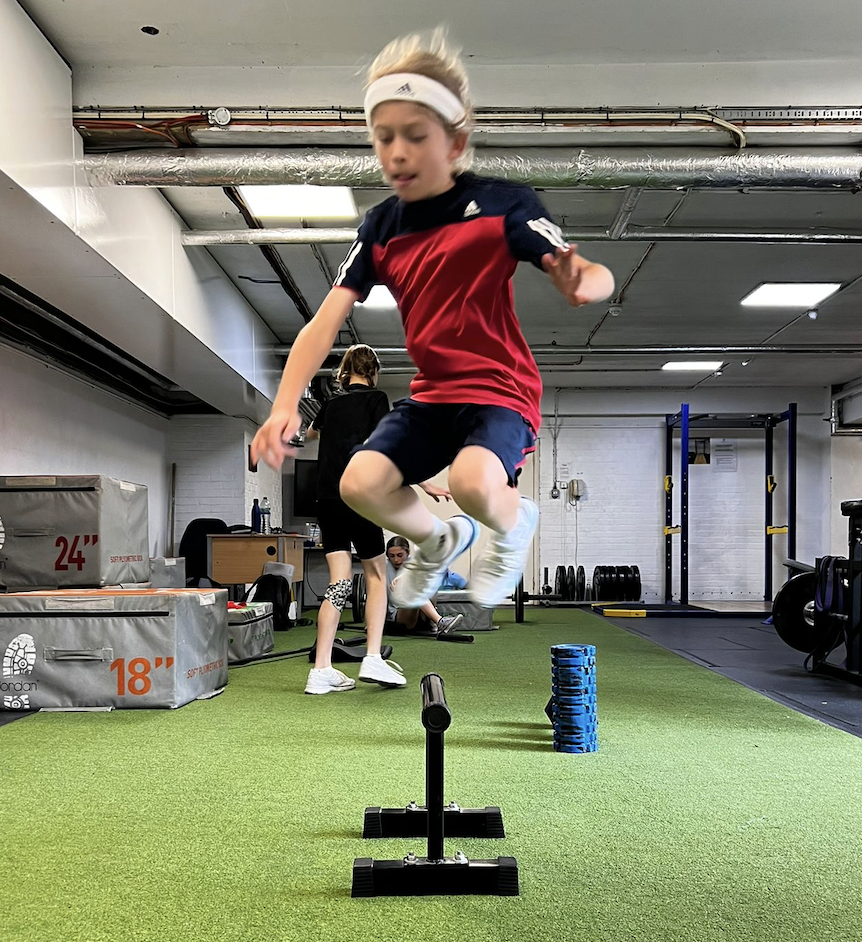
- Jump variations
- Medicine ball throws
- Controlled Olympic lift derivatives
- Bodyweight power drills
Always coached, always progressed appropriately.
5. Technique Is King — Strength Supports It
Elite coaches repeatedly emphasise one theme: technique is king.
Strength training does not replace technical skill. It enhances the swimmer’s ability to hold strong positions in the water, maintain posture under fatigue, and apply force effectively.
Interestingly, research suggests that more technical swimmers tend to transfer gym work more effectively into the pool (Crowley et al., 2018).
This highlights an important principle:
Strength and skill must develop together.
6. What Safe Youth Strength Training Actually Looks Like
Evidence-based youth S&C is:
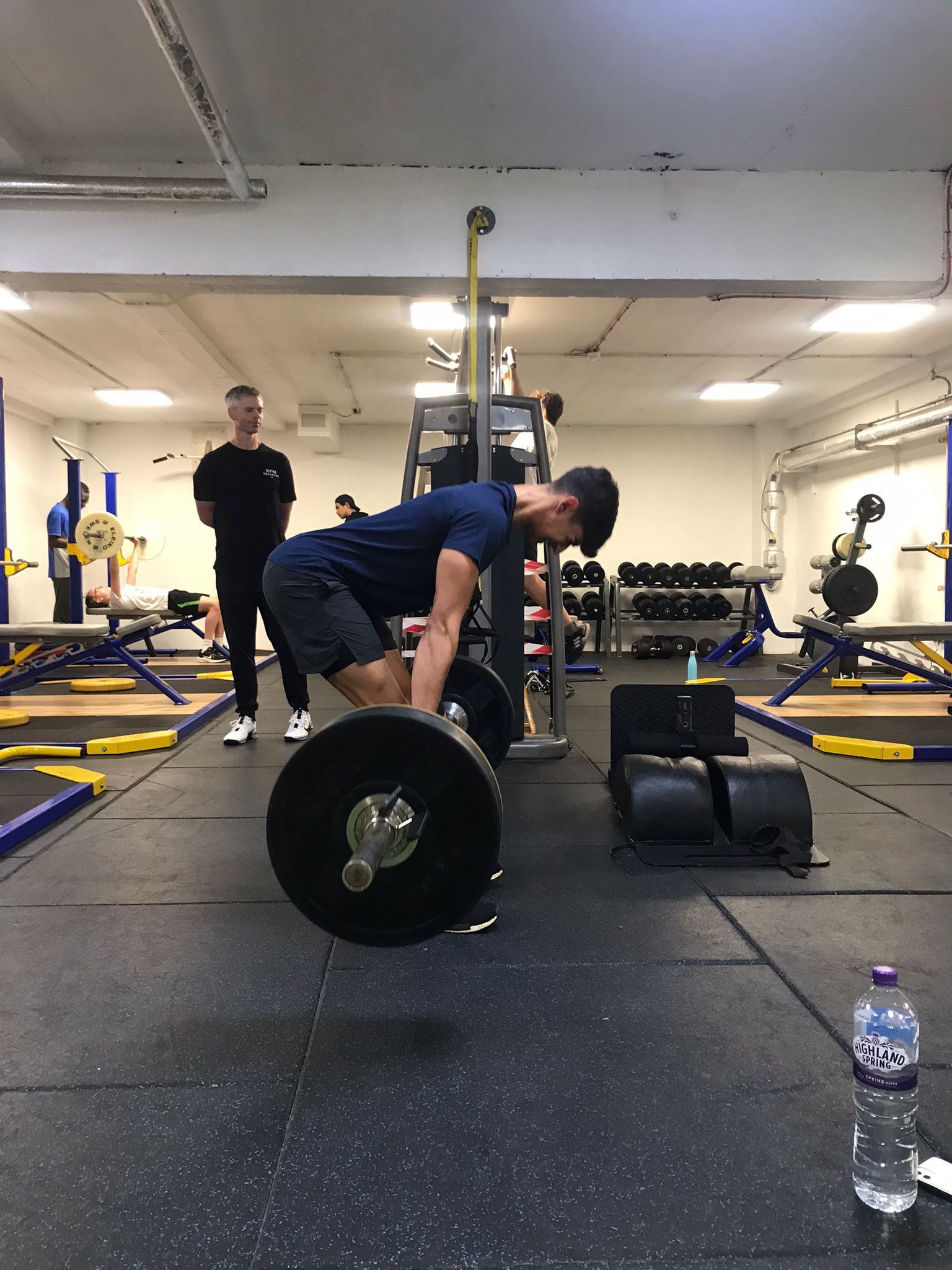
✔ Supervised
✔ Technique-driven
✔ Progressive
✔ Age-appropriate
✔ Focused on movement quality first
It begins with:
- Bodyweight competency
- Mobility and posture
- Trunk stability
- Basic bilateral strength patterns
Then gradually progresses toward:
- Controlled external load
- Explosive intent
- Sprint-specific power
It is never random. It is never maximal for ego. It is always athlete-centred.
Why This Matters for Your Child’s Long-Term Development
Early exposure to properly structured strength training:
- Builds confidence
- Enhances athletic literacy
- Reduces injury risk
- Improves performance ceilings
- Supports long-term progression
Perhaps most importantly — it prevents your child from being the athlete who “works hard in the pool” but cannot convert that work into speed.
Is Your Swimmer Missing a Key Piece?
If your child:
- Has plateaued in performance
- Struggles with start speed
- Lacks power off turns
- Complains of shoulder fatigue
- Seems strong in training but doesn’t convert it in races
There may be a gap in their physical preparation.
References
Crowley, E., Harrison, A. J., & Lyons, M. (2018). Dry-land resistance training practices of elite swimming strength and conditioning coaches. Journal of Strength and Conditioning Research, 32(9), 2592–2600.
Strength and Conditioning for Sprint Swimming (2021).
Effect of Ballistic Potentiation Protocols on Sprint Swimming Performance (2023).
Analysis of Freestyle Swimming Sprint Start Performance (2022).
.jpeg)
.jpg)

%20(1).jpg)